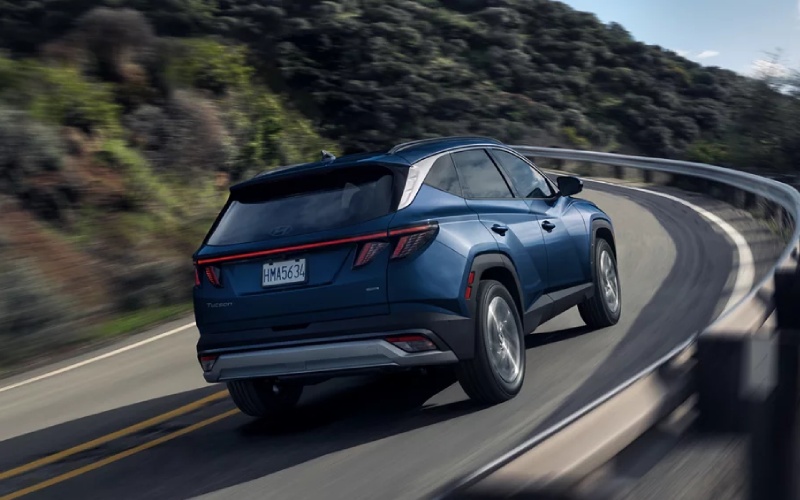
CardinaleWay Hyundai - Is the 2026 Hyundai Tucson More Comfortable Than the 2026 Toyota RAV4 for Ontario, CA Commutes?
Yes, for many shoppers, the 2026 Hyundai TUCSON can feel more comfortable than the 2026 Toyota RAV4 because Hyundai places a strong emphasis on cabin layout, intuitive technology, supportive seating, and a smooth everyday driving personality. The RAV4 remains a strong compact SUV with an all-new design, standard hybrid powertrain, available plug-in hybrid capability, Toyota Safety Sense™ 4.0, and available features such as a 12.9-inch Toyota Audio Multimedia system. Even so, comfort is not only about having a long list of features. It is about how naturally a vehicle fits into everyday life. For commuters traveling between Ontario, Corona, and nearby Inland Empire communities, TUCSON offers a calm, well-organized cabin and an easygoing gasoline powertrain that can make daily driving feel less demanding.
The most common question shoppers ask when comparing these SUVs is simple: which one will feel better to drive and live with every day? That answer depends on personal priorities, but TUCSON has a clear advantage for drivers who value a quieter, more straightforward experience with modern convenience built in. Hyundai’s compact SUV offers standard 187 horsepower, available HTRAC AWD, available Hyundai Digital Key 2 Touch, available Blind-Spot View Monitor, available Highway Driving Assist, wireless Apple CarPlay® and Android Auto™ compatibility, and the reassurance of America's Best Warranty with a 10-Year/100,000-Mile Powertrain Limited Warranty. Toyota’s RAV4 leans into electrified performance and strong digital technology, but shoppers who prefer a conventional gasoline SUV may find TUCSON easier to understand, easier to maintain in routine use, and more natural behind the wheel.
Why Comfort Means More Than Seat Cushions
Comfort starts with the seat, but it does not end there. A truly comfortable SUV should be easy to enter, simple to adjust, clear to see out of, and pleasant to operate during repeated short trips as well as longer freeway stretches. TUCSON does a strong job with these everyday details. The cabin feels open and practical, with controls placed where drivers expect to find them. Available ventilated front seats can improve comfort during longer drives, while available premium interior materials on select trims give the cabin a more refined feel.
The RAV4 also offers useful comfort features, including available heated and ventilated front seats on select trims and SofTex®-trimmed seating on certain models. However, Hyundai’s interior design feels especially cohesive because the digital display layout, center controls, and seating position work together in a way that feels natural quickly. That matters for drivers who spend time on I-15, SR-60, or I-10, where stop-and-go traffic can make cabin comfort a daily priority rather than a luxury.
Technology That Supports the Drive
TUCSON’s available Panoramic Curved Display is one of its most appealing interior features. It gives the front cabin a modern, upscale look while keeping important information within easy view. Combined with wireless Apple CarPlay® and Android Auto™ compatibility, the system supports navigation, calls, music, and messages without making the driver work through unnecessary layers. Hyundai Digital Key 2 Touch, available on select models, adds another level of convenience by allowing compatible device-based vehicle access.
RAV4 counters with strong technology of its own. Toyota lists a standard 12.3-inch digital gauge cluster, a 10.5-inch Toyota Audio Multimedia system on lower trims, and an available 12.9-inch multimedia touchscreen on select models. Those are impressive features, and Toyota’s system has clear appeal. The difference is that Hyundai’s cabin experience feels less like a collection of separate screens and more like an integrated environment. For many drivers, that makes the TUCSON feel more relaxing during daily use.
- Display design: TUCSON offers an available Panoramic Curved Display that gives the cabin a clean, connected look.
- Phone integration: Wireless Apple CarPlay® and Android Auto™ compatibility help simplify everyday connectivity.
- Access convenience: Available Hyundai Digital Key 2 Touch can reduce the need to carry a traditional key.
Driving Feel Around the Inland Empire
Comfort also comes from how an SUV behaves on the road. TUCSON’s standard gasoline engine delivers 187 horsepower, and the vehicle’s calm steering and composed ride make it well-suited for daily commutes, school drop-offs, shopping trips, and weekend plans. The available HTRAC AWD system can add confidence when road surfaces or routes change, while the overall driving character remains predictable and easy to manage.
The 2026 RAV4 offers hybrid and plug-in hybrid powertrains, along with available AWD. That electrified approach can be a great fit for some drivers, especially shoppers who want a hybrid as the default choice. Still, not every customer wants a hybrid-only compact SUV. Some prefer the familiarity of a gasoline powertrain and the straightforward service routine that comes with it. For those shoppers, TUCSON may feel more comfortable simply because its operation is familiar from the first test drive.
Safety Features That Reduce Stress
Safety technology can make a major difference in perceived comfort. A vehicle feels more relaxing when it helps support awareness in traffic, assists with lane positioning, and provides useful alerts without feeling intrusive. Hyundai SmartSense® features available on TUCSON can include Forward Collision-Avoidance Assist, Lane Keeping Assist, Lane Following Assist, Smart Cruise Control, Highway Driving Assist, and Blind-Spot View Monitor, depending on trim. Blind-Spot View Monitor is especially helpful because it can show a camera view of the adjacent lane in the digital cluster when the turn signal is used.
Toyota Safety Sense™ 4.0 on the 2026 RAV4 is also a sophisticated suite, and available features such as Traffic Jam Assist and Advanced Park add genuine convenience. Even so, Hyundai’s available Blind-Spot View Monitor and Highway Driving Assist give TUCSON a very driver-friendly feel in busy freeway traffic. For shoppers comparing real-world commuting comfort, those available Hyundai systems deserve close attention during a test drive.
- Start with seating position: Adjust the seat, mirrors, and steering wheel to see which SUV feels more natural.
- Test the infotainment layout: Pair a phone and check how easily maps, audio, and calls are accessed.
- Evaluate driver assistance: Ask which safety features are standard or available on the exact trim being considered.
- Drive familiar roads: If possible, sample freeway speeds and surface streets to compare ride comfort.
Ownership Confidence Matters Too
Daily comfort is not limited to the driver’s seat. Long-term peace of mind also shapes how satisfying an SUV feels to own. Hyundai’s warranty coverage is a meaningful advantage, with America's Best Warranty and a 10-Year/100,000-Mile Powertrain Limited Warranty standard. That level of coverage can make TUCSON especially appealing for shoppers planning to keep an SUV for years. CardinaleWay Hyundai, serving Riverside, Chino, and Ontario, can help explain trim differences, available features, and Hyundai ownership benefits in a clear, no-pressure way.
Toyota has a strong ownership reputation, and RAV4 remains a popular choice for good reasons. However, the Hyundai advantage is easy to appreciate when comfort, technology, powertrain familiarity, and warranty confidence are considered together. TUCSON does not need to rely on one standout feature alone. Instead, it builds a stronger everyday case through thoughtful design, intuitive features, and a driving experience that feels comfortable from the start.
Frequently Asked Questions:
Is the 2026 Hyundai TUCSON more comfortable than the 2026 Toyota RAV4?
Many drivers may find TUCSON more comfortable because of its cohesive cabin layout, available Panoramic Curved Display, supportive seating, available ventilated front seats, and smooth gasoline powertrain. RAV4 is also comfortable, but TUCSON may feel more natural for shoppers who prefer a conventional SUV driving experience.
Does the 2026 Hyundai TUCSON offer all-wheel drive?
Yes. TUCSON offers available HTRAC AWD, which can help improve confidence on changing road surfaces and during varied driving conditions. RAV4 also offers available AWD, but Hyundai’s HTRAC system is a key reason shoppers choose TUCSON.
Which SUV has better technology for commuting?
Both SUVs offer impressive technology. RAV4 has a standard 12.3-inch digital gauge cluster and available 12.9-inch touchscreen, while TUCSON offers an available Panoramic Curved Display, available Hyundai Digital Key 2 Touch, wireless Apple CarPlay® and Android Auto™ compatibility, and available driver-assistance features such as Highway Driving Assist and Blind-Spot View Monitor.
Why should shoppers test drive the Hyundai TUCSON first?
TUCSON delivers a well-rounded mix of comfort, modern technology, available HTRAC AWD, standard 187 horsepower, and outstanding warranty coverage. A test drive helps shoppers feel how naturally the SUV fits daily commuting, family use, and longer drives.
For Ontario-area commuters comparing compact SUVs, TUCSON deserves the first drive because it answers the comfort question with more than soft seats or digital screens. It brings together thoughtful ergonomics, helpful technology, confident road manners, and long-term support. The RAV4 is a respected competitor, but Hyundai’s compact SUV offers a more approachable and reassuring package for many daily drivers.